Why Is Tesla Stock Going Down? The Honest Answer
Five reasons any stock falls, the ones that actually apply to Tesla, and what a long-term owner should do about it.
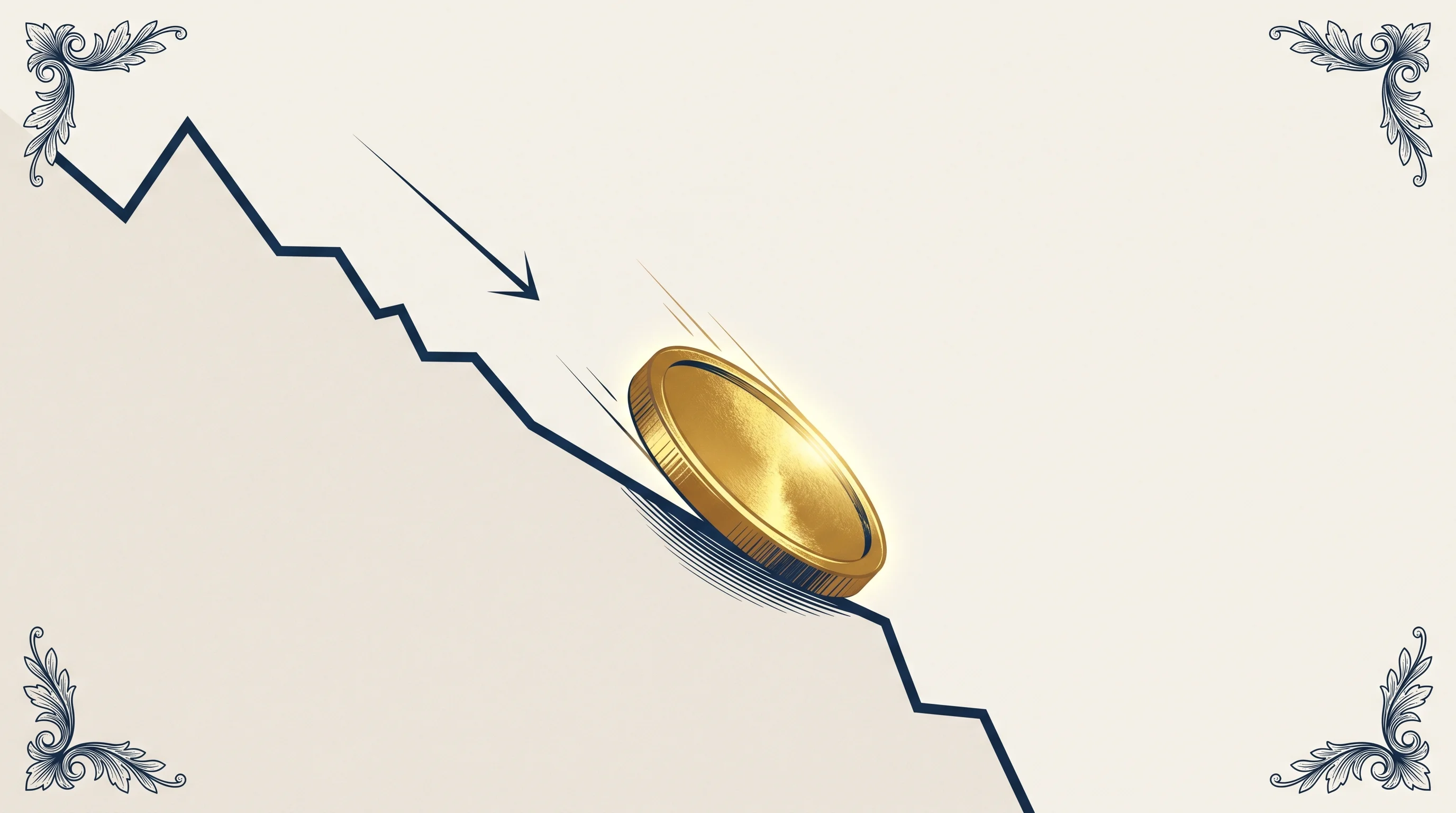
Short answer: Tesla stock is going down for some combination of five reasons. Three of them are normal market noise that long-term owners should ignore. Two of them should actually worry you. Tell them apart and you know what to do.
Tesla is the most-volatile mega-cap in the US market. The stock can fall 10 or 15 percent in a week with no news. It can fall 30 percent in a quarter and recover all of it the next quarter. When that happens, the question every retail Tesla owner asks is the same: why is Tesla stock going down right now, and should I sell?
This guide is the honest answer in plain English. We will walk through the five reasons any stock drops. We will look at which ones usually apply to why is Tesla stock going down in 2026. Then we will tell you exactly what a long-term owner should and shouldn't do. No finance degree needed.
The five reasons any stock goes down (including why is Tesla stock going down)
Before we look at Tesla specifically, here are the five reasons any stock can drop — in plain language, no finance jargon.
1. The whole market is going down. Sometimes everything falls together. Interest rates rise. Inflation spooks investors. A geopolitical scare hits the news. The selling has nothing to do with any one company. A 5 percent drop on Tesla on a day when the S&P 500 is also down 4 percent is mostly the market, not the stock.
2. The whole sector is going down. Investors sometimes rotate out of one part of the market into another. AI and growth stocks fall while energy or healthcare goes up. The company itself hasn't changed. Tesla is especially exposed to this — it trades like a growth stock, and growth stocks move together.
3. The company missed expectations. Tesla reports quarterly delivery numbers and earnings. When revenue, deliveries, or margin come in below what analysts expected, the stock falls. This is the most common stock-specific cause of a Tesla drop. Whether it matters long-term depends on whether the miss was a one-off or a sign of a real change.
4. Something in the business actually changed. A major competitor wins on price or product. FSD slips by another year. A regulator says no. Demand softens in a major market. These are the drops that matter — the price falls because the business is genuinely worth less than yesterday.
5. The stock was too expensive and is mean-reverting. Sometimes a stock just rises too far too fast, and gravity takes over. The business hasn't changed. The price was running ahead of any defensible calculation of value. Eventually the math catches up. Tesla is unusually prone to this — the stock has had several 50%+ drawdowns from peaks over its history.
The first three reasons are normal stock-market noise. Long-term owners ignore them. The fourth is the only one that should actually cause you to re-think your position. The fifth is uncomfortable but usually self-correcting if the underlying business is still strong.
How to tell which reason is driving the Tesla drop
Knowing the five reasons is half the work. The other half is identifying which one is firing on the day you are looking at the chart. Here is the simplest test:
- Is the whole market also down? Check the S&P 500. If it's down too, reason 1.
- Are other growth or AI stocks also down? Check Nvidia, Amazon, Meta. If they're all down together, reason 2.
- Did Tesla report deliveries or earnings recently? Check the date of the last release. If the drop started right after, reason 3.
- Is there a specific news story about Tesla's business? Competitor product launch, FSD delay, demand warning, executive change, regulatory action. If yes, reason 4.
- None of the above, and the drop is just gradual selling? Reason 5 — the math catching up with the price.
Most Tesla drops are a mix. The diagnostic question is which one is dominant, because the right response is different for each.
So, why is Tesla stock going down right now?
For Tesla in 2026, all five reasons are usually in play to some degree. Here's how to think about each in the specific case of why is Tesla stock going down.
Is it the whole market? Look at the S&P 500 over the same period. If broad-market stocks are also down meaningfully, much of Tesla's drop is just market noise. Long-term Tesla owners should not adjust their position because the Fed surprised on interest rates.
Is it the whole growth sector? Compare Tesla to Nvidia, Amazon, Meta, and Microsoft over the same window. If they are all selling off together, this is sector rotation — investors moving from growth into other parts of the market. It will reverse the same way it began.
Did Tesla miss deliveries or earnings? Tesla's quarterly delivery number is the single most-watched metric for the stock. A miss on deliveries — even one quarter — can knock 10-15 percent off the price within a week. A miss on margin (driven by price cuts to defend volume) can do the same. A single-quarter miss is rarely the end of the story. Three quarters of misses in a row is.
Did something in the business actually change? This is the one that matters for a long-term position. Watch four specific things: (a) Chinese EV competition (BYD, Xiaomi, Li Auto) — if their market share grows materially against Tesla, the moat is narrowing in real time; (b) FSD progress — every delay erodes the bull case; (c) energy storage growth — Tesla's energy business is becoming a meaningful contributor; (d) executive controversies and the Musk distraction tax — material because Musk is the center of the brand and strategy.
Or was Tesla just too expensive? This is the boring answer most articles avoid. Tesla at recent peaks has implied market values of $1.5 trillion or more. The cash the business produces today gives you a 0.4 percent yearly return at that price — a tenth of a Treasury bond. We walk through the math in our companion piece on whether Tesla is overvalued. Sometimes a stock falls just because the price ran ahead of what the math can defend, and the market is correcting that.
If the drop is mostly from reasons 1, 2, 3, or 5, the business is still the business. If it's reason 4, you have actual work to do. That single distinction is the whole answer to why is Tesla stock going down mattering to a long-term owner — or not.
The Musk factor: Tesla's special variable in why is Tesla stock going down
There is one Tesla-specific variable that doesn't fit cleanly into any of the five reasons: the CEO. Elon Musk is more central to Tesla than almost any CEO is to any large company. His public statements move the stock. His other companies (xAI, X, SpaceX, the Boring Company) compete for his attention. Major events around him — political activity, personal controversies, compensation packages — regularly drive Tesla price moves that have nothing to do with car deliveries or AI progress.
For practical purposes: treat Musk-driven drops as a sixth category that overlaps with reason 1 (general noise) when the news is short-term, and overlaps with reason 4 (real business change) when the news suggests Musk's attention is permanently divided away from Tesla. The harder a single specific news cycle is to translate into a future-cash-flow consequence, the more it should be treated as noise. Most Musk-driven drops fall into that bucket. A few don't.
What retail investors should actually do when Tesla falls
Here is the framework, simplified. It works for the question of why is Tesla stock going down, and for any other stock you own.
Step 1 — Identify which of the five reasons is driving the drop. Most of the time you can tell within thirty minutes of reading the news and looking at the broader market.
Step 2 — If it's reasons 1, 2, or 3 — do nothing. Don't sell. Don't double down. The drop is not signal about the underlying business. Long-term investors who get rich do so by not trading in response to short-term volatility. A position you bought with a defensible thesis does not stop being defensible because the market had a bad week.
Step 3 — If it's reason 4 — re-do your homework. Pull the latest filings. Check whether the change is a one-off or a permanent business shift. If the business has gotten worse, the position has gotten worse. Decide based on the new facts, not on your purchase price.
Step 4 — If it's reason 5 — decide whether you were too late, not whether to panic. A stock falling because the price was unsustainable is a real signal — but it's a signal about the entry, not the company. If the business is still strong, the new lower price might be a chance to add. If the business is also weakening, get out.
Step 5 — Write your reasoning down. Whatever you decide, write a one-paragraph note about why. Six months from now, when the stock has moved again, that note tells you whether your original logic was right or whether the world changed in ways you didn't anticipate. This single habit separates investors who learn from investors who guess.
The reason most retail portfolios underperform is not that the math is hard. It's that reacting to noise costs you money over time. Owning a high-quality business through a 15 percent drop is how compounding actually happens. The question of why is Tesla stock going down only matters if the answer is reason 4 — and even then, only if your homework confirms it. Everything else is noise pretending to be signal.
What would change "why is Tesla stock going down" from noise to signal
If you own Tesla (or are considering it) and want a clear list of things that would change your mind, here it is. Watch for any of these in the coming filings and quarterly releases.
- Tesla deliveries decline year-over-year for three consecutive quarters. Even one or two soft quarters happens during transitions. Three in a row is a structural demand problem.
- Operating margin stays below 5 percent for the full fiscal year. FY2025 came in at 4.6%. Another full year at that level — without a clear margin-recovery path — means the business has been permanently re-rated.
- Chinese competitors (BYD, Xiaomi, Li Auto) collectively take Tesla's global EV market share below 15 percent. Tesla led the EV market by a wide margin five years ago. A drop into single-digit minority share would mean the moat has narrowed beyond what the bull case assumes.
- FSD slips a major milestone for a fourth consecutive year. "Next year" is a Tesla joke at this point. A fourth year of the same delay is a credibility problem, not a timeline problem.
- Tesla's energy storage business stops growing for two consecutive quarters. The energy business has been the bull's quiet upside. If that stops, the diversification story breaks.
If none of these are happening, the stock can fall 20 percent and the business is still fine. That's reason 5 doing its job — and reason 5 is usually not a reason for a long-term owner to sell. The honest answer to why is Tesla stock going down in any given month, in most cases, is "the price was too high and the math is catching up". That is uncomfortable. It is not, on its own, a reason to sell.
Related reading
For the broader bull-case analysis on Tesla, see our companion piece Is Tesla Stock a Buy?. For the bear case and the math behind it, see Is Tesla Overvalued?. For why Tesla returns cash through reinvestment rather than dividends, see Does Tesla Pay Dividends?. For comparison reads on the other AI-era stock with similar dynamics, see Why Is Nvidia Stock Going Down?. For the general framework that produces these checks, see our how to research a stock before buying guide and the 5-question good-buy checklist.
For more long-form essays on plain-English stock analysis, see the rest of the Hub.